
Pest control Glasgow
Ant Control in GlasgowNest Traced, Treatedat Source & Proofed Out
Killing the ants on the worktop changes nothing, the colony keeps producing. We follow the trail back to the nest, treat it at source and close the route into your property.
Domestic and food-premises ant work in Glasgow. RSPH accredited, answered 24/7.
Accredited
IPAF, CSCS, SSSTS and RSPH
24/7
Phone answered around the clock
£5m / £10m
Public, product and employers liability cover
IPAF · CSCS · SSSTS · RSPH
Accredited technicians
Same day
Attendance wherever the diary allows
Black ants (Lasius niger) are the usual Glasgow ant problem: trails along skirtings and worktops, columns running under a door threshold, flying ants indoors on a warm day in summer. They are foraging, and the workers you can see are a small fraction of the colony.
That is why spray-and-wipe never works for long. Titan traces the trail back to the nest, under paving, beneath a threshold, in a cavity or under a floor, treats the colony at source, then seals the route the workers were using.
What ant control involves
Following active trails to establish where the colony sits, treating at source so the queen and brood are affected rather than only the foragers, and then proofing the entry point so the property is not simply re-colonised from the same nest area next season.
In food premises, product choice and placement are selected for the environment, and treatment is planned around preparation areas and trading hours.
Who it is for
Householders with a recurring summer trail, cafés, bakeries, shops and takeaways where ants near food are unacceptable, and landlords dealing with ground-floor flats where the nest sits under adjacent paving.
When to call
When a trail is consistent rather than occasional, when ants are reaching food storage, or when the same problem has returned for a second or third summer. Recurrence is the clearest sign the nest was never treated.
Why professional help matters
Retail ant powders and sprays kill foragers and often cause the colony to bud, splitting into satellite nests and making the problem larger. Treating at source with the correct product is what removes the colony, and proofing is what stops the next one moving in.
Signs to look for
- Consistent ant trails along skirtings, worktops or paths
- Flying ants emerging indoors in summer
- Fine soil deposits near door thresholds or paving joints
- Activity concentrated around food storage or bins
- Repeated infestation in the same spot each year
- Ants appearing from a single crack, socket or threshold
What happens if it is left
Food contamination
Ants travel drains, bins and soil before reaching a worktop. In a home it is unpleasant; in a food business it is a compliance issue.
Colonies expand and split
Repeated surface spraying can cause a colony to bud into multiple nests, turning one problem into several.
Annual recurrence
An untreated nest under paving or a threshold reappears every warm season, with the same disruption and the same cost each time.
Flying ant swarms
Mature colonies produce winged reproductives in summer, which is how new nests establish nearby, including inside the building envelope.
Customer perception
Ants on a café counter cost more in lost custom than the treatment does.
Common mistakes we are called in to undo
- - Spraying visible workers, which achieves nothing for the colony
- - Wiping away the trail before the technician can follow it
- - Using retail powders that cause the nest to bud into satellites
- - Sealing the entry point while the nest stays active inside the cavity
- - Assuming ants are a cleanliness problem rather than a nest-location problem
- - Waiting until the swarm, by which point the colony is mature
Our ant control process
Step 1: Inspection
Trails are followed inside and out to locate the nest area: paving, thresholds, cavities, under floors or in soil against the building.
Step 2: Diagnosis
Species and nest position confirmed, treatment method selected for the setting, and the price agreed before work starts.
Step 3: Treatment
Applied at source so the colony is affected, using products suitable for the premises, including food environments.
Step 4: Verification
Activity is reviewed after treatment and a follow-up is carried out where the level of activity justifies it.
Step 5: Proofing and completion
Entry routes are sealed where practical and you get straightforward advice on food storage, spillage and waste that keeps the property uninteresting to foragers.
What you get from Titan
Treats the cause
Nest located and treated at source, not just the workers you can see.
Speed
Answered 24/7 with same-day attendance wherever the diary allows.
Safe in food settings
Products and placements chosen for kitchens, cafés and food premises, with RSPH accredited technicians.
Longevity
Proofing the entry route is what stops the same trail returning every summer.
Cost savings
One properly treated nest is cheaper than three years of repeat retail products and lost trade.
Clear pricing
Priced before work starts, with no open-ended visit schedules.
Ant Control in detail
Where black ant nests sit
The common nest positions in Glasgow properties are under paving slabs and path edges, beneath door thresholds, in soil directly against the wall, under ground-floor floors, in cavity walls and occasionally within insulation. The trail is the evidence, which is why we ask you not to wipe it away before we arrive.
Flying ant days in mid-summer indicate a mature colony nearby producing reproductives. It is a good indicator of where to survey.
Methods and materials
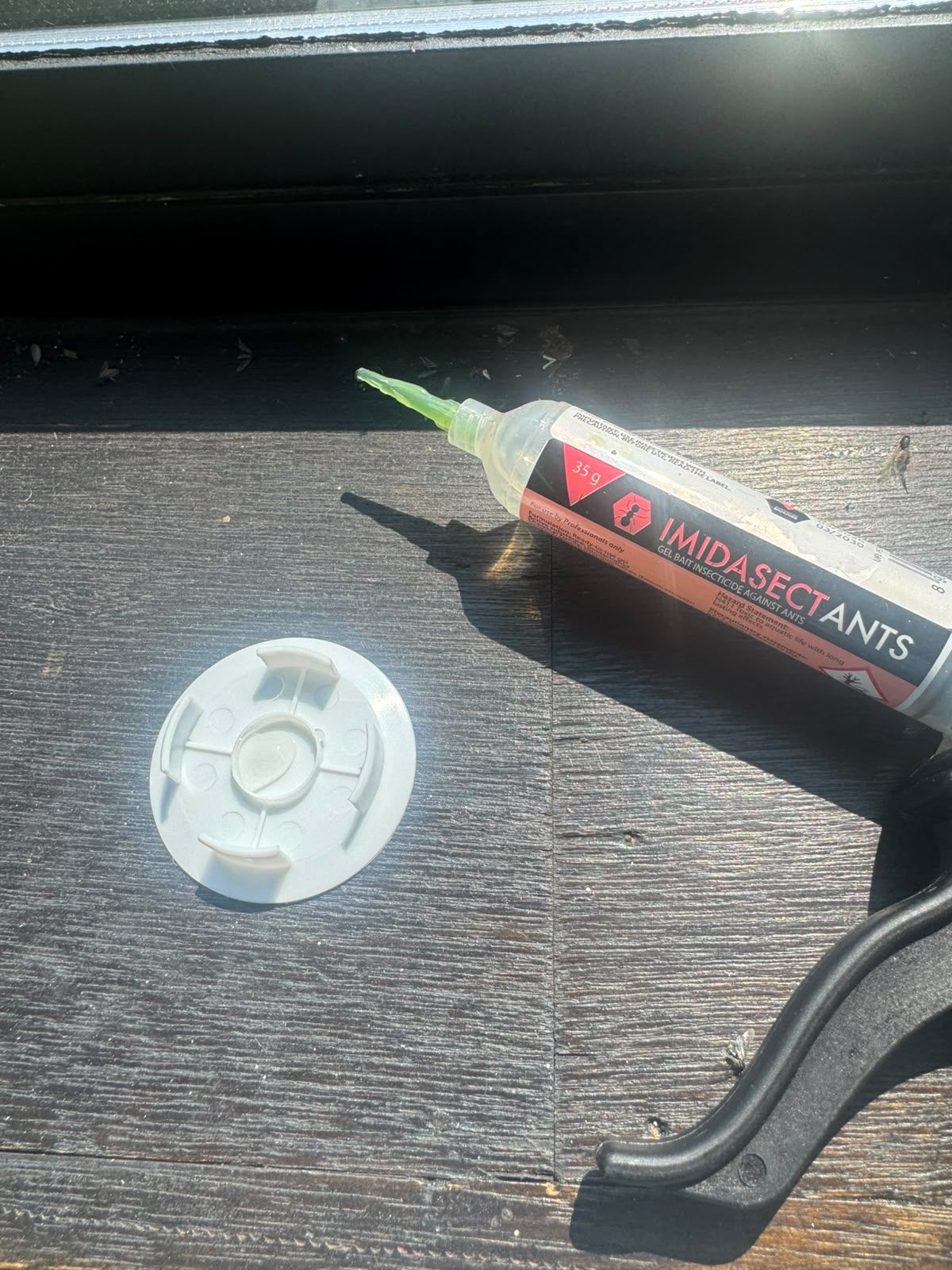
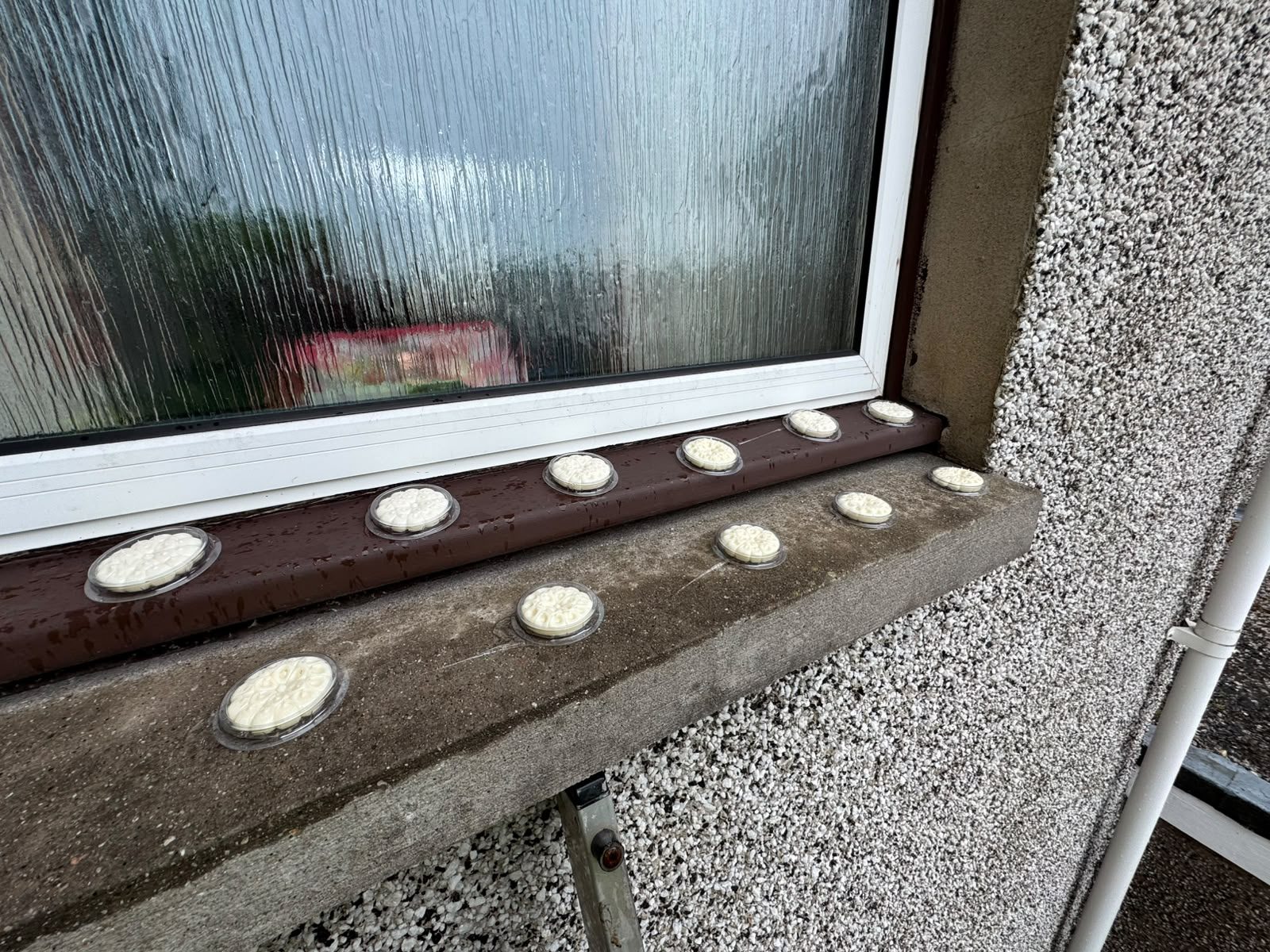
Treatment is chosen around the setting: gel and bait-based approaches that foragers carry back to the colony work well in kitchens and food premises where residual spraying is unsuitable, while external nest treatment is appropriate where the colony sits in paving or soil.
Proofing uses sealant and mortar repair at thresholds, around service penetrations, at skirting gaps and paving joints against the building.
Residential versus commercial
Domestic jobs are usually a single visit plus proofing advice. Cafés, bakeries, takeaways and shops get treatment scheduled around trading, products appropriate to food environments and, where useful, inclusion in a monthly routine contract.
Coverage
Glasgow and roughly a 20-mile radius, including Paisley, East Kilbride, Hamilton, Motherwell, Coatbridge, Cumbernauld, Clydebank and Bearsden.
How we work on every job
- Nest located rather than guessed at
- Treatment at source so the colony is dealt with, not just the workers
- Entry routes sealed where practical
- Products suitable for food premises where required
- Follow-up where activity justifies it
Ant Control in your area
We cover Glasgow and roughly a 20-mile radius, including Glasgow, Clydebank, Cumbernauld. See every town on our service areas page, or read more about Titan Pest Control.
Ant Control FAQs
How much does ant treatment cost?
Most domestic ant jobs are straightforward and priced before work starts. Cost varies with access to the nest and whether proofing work is needed, and you will have the figure before we begin.
How long does it take to clear an ant infestation?
Activity usually falls away within days of a source treatment as the product moves through the colony. Some continued movement immediately after treatment is normal and expected.
Why do ants come back every summer?
Almost always because the nest survived and the entry route is still open. Both need dealing with, which is why we trace the trail rather than treating the worktop.
Should I clean the trail before you arrive?
Please leave it. The trail is what lets us follow the ants back to the nest, and wiping it away makes the survey harder.
Are the treatments safe around children, pets and food?
Yes. Placement and product are chosen for the setting, including food premises, and we explain what has been used and where before leaving.
Do you treat flying ants?
Yes. Flying ants indoors mean a mature colony is nearby, so the work is the same: locate the nest, treat at source and proof the route.
Do you treat cafés and food businesses?
Yes, with suitable products and scheduling around trading hours. Ongoing monthly routine contracts are available.
Can you come out the same day?
Wherever the diary allows, yes. The phone is answered 24 hours a day.
End the trail at the nest, not on the worktop
Send your postcode and where you are seeing the trail, and we will price the treatment and any proofing together.
Phone answered around the clock · Glasgow and roughly a 20-mile radius · fully insured, accredited technicians.
Related services
Insect Control
Wasp nests treated at the nest, fleas, beetles and clothes moths cleared properly, usually the same day in season, so the problem ends this week rather than dragging through the summer.
View serviceCockroach Control
German and Oriental cockroach programmes that clear the infestation, stand up to environmental health scrutiny, and are run around your trading hours instead of across them.
View serviceMouse Control
Mice get in through a gap the width of a pencil. We clear the active infestation, then find and close every route they are using, so you stop hearing them instead of re-treating them.
View serviceLooking for something else? See all 9 services or contact Titan Pest Control.